
ERSI
In 1933, Sigmund had fled to the Netherlands with his family from the Nazis. He started a toy store, ERSI (Ernst Sigmund), which was located at Roomolenstraat 16-18 in Amsterdam.
Robert Helbing
ERSI was a toy company that Sigmund had founded together with Robert Helbing. There is an envelope on which his name is listed alongside that of Sigmund (see collection). In addition, their names appear on an invoice.
Robert Helbing, his wife Gertrud Louise Helbing-Mecklenburg, and their two children; son Harold George and daughter Flory Vivian, were all murdered in Auschwitz.
In Germany, Sigmund had been a toy buyer for the Landauer department store in Worms. As a result, he had contacts with toy factories in Germany and Czechoslovakia, including Schowanek, which produced wooden beads and building blocks.
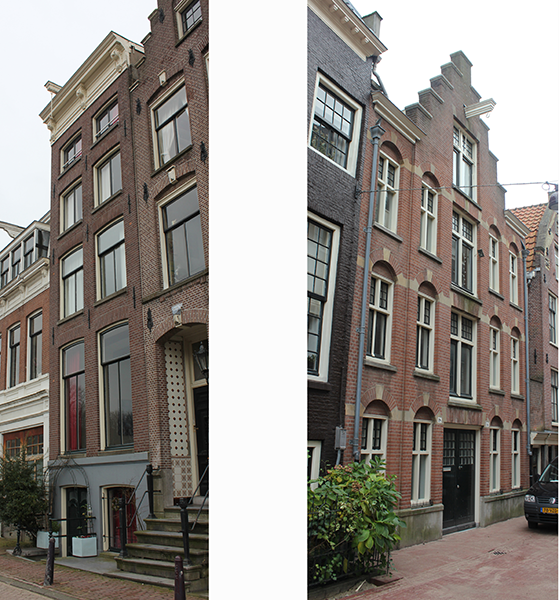
The ERSI office of Mr. Sigmund, was located at Roomolenstraat 16-18 in Amsterdam. After the war, Sio's sales office was established at Herengracht 25 (on the left), which is adjacent to the back of the building on Roomolenstraat (on the right).
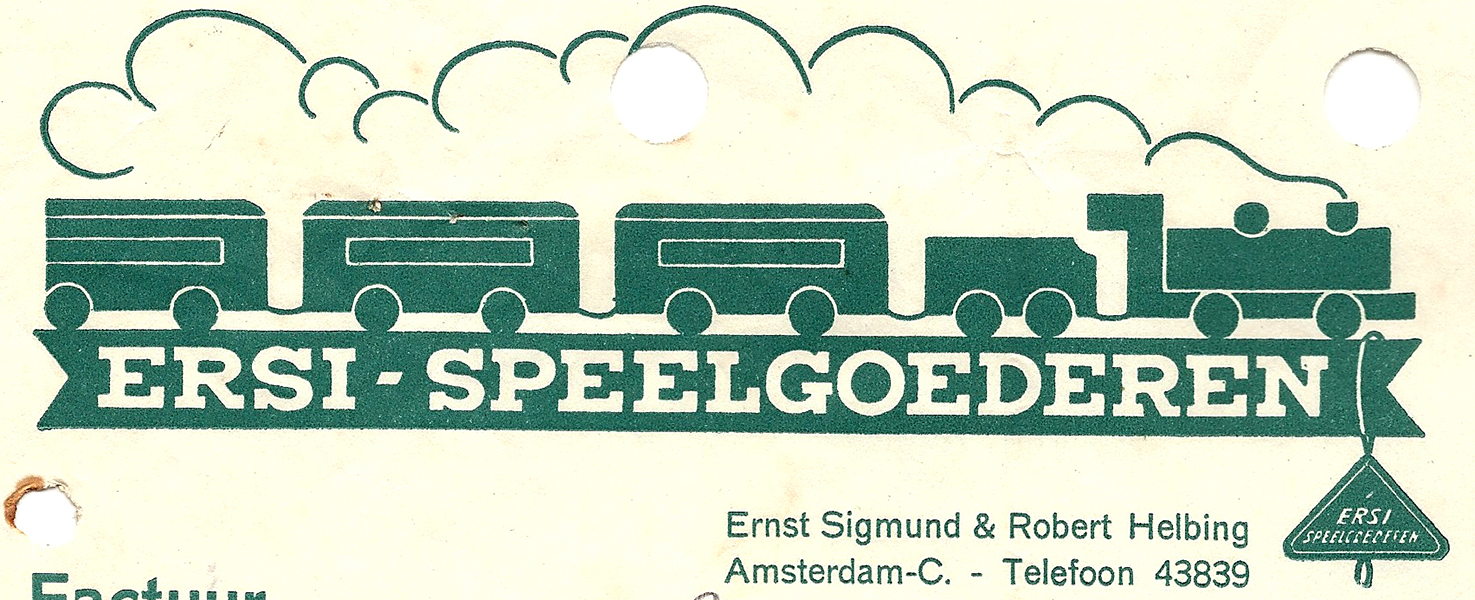
ERSI Toys
According to an advertisement in the Nieuwsblad van Friesland from 1937, the collection of toys sold by ERSI was very diverse, including picture and coloring books, paint boxes, jigsaw puzzles, doll cradles, miniature furniture, teddy bears, model trains, and stations.
An invoice for ERSI toys from November 1940 lists cars, garages, and [train] tracks.
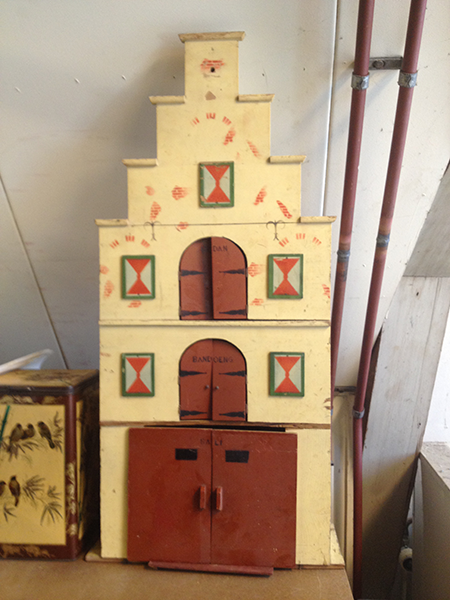
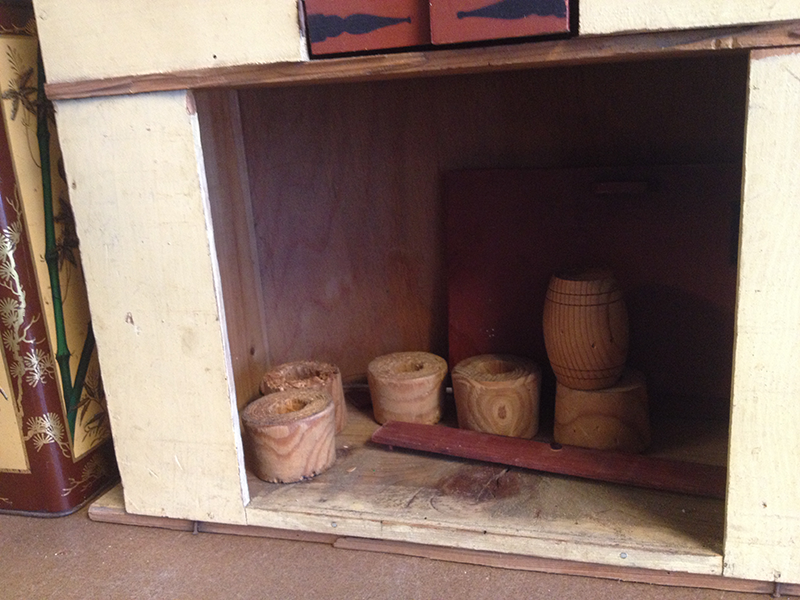
Toy warehouse
Toy warehouse from the late 1930s. It is part of the collection of the West Fries Museum in Hoorn. The names Medan, Bandung, and Bali are on the doors from top to bottom.
The shape of the warehouse produced for ERSI strongly resembles the office in Amsterdam.
Schowanek
Schowanek was a major, leading manufacturer of wooden toys during Sigmund's time. They co-developed wood coloring techniques. Wooden parts were rotated in large drums with dye, and the movement caused the color to penetrate deep into the wood grain. This resulted in a beautiful, bright, transparent color.
Sigmund imported Schowanek toys from the Czech Republic and Austria, where factories were located.
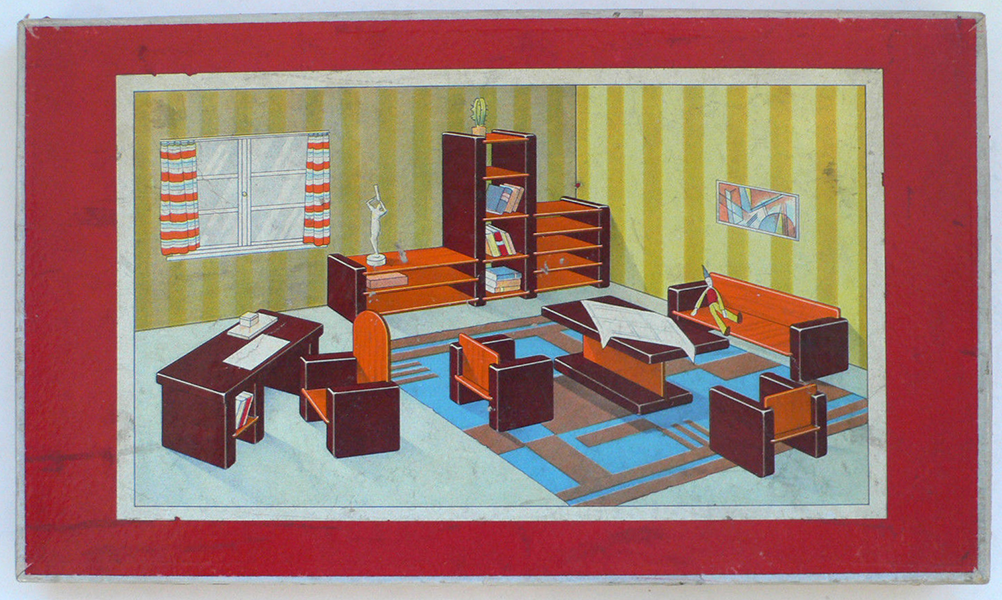
Schowanek toys; box with miniature dollhouse furniture. Loose parts that can be assembled.
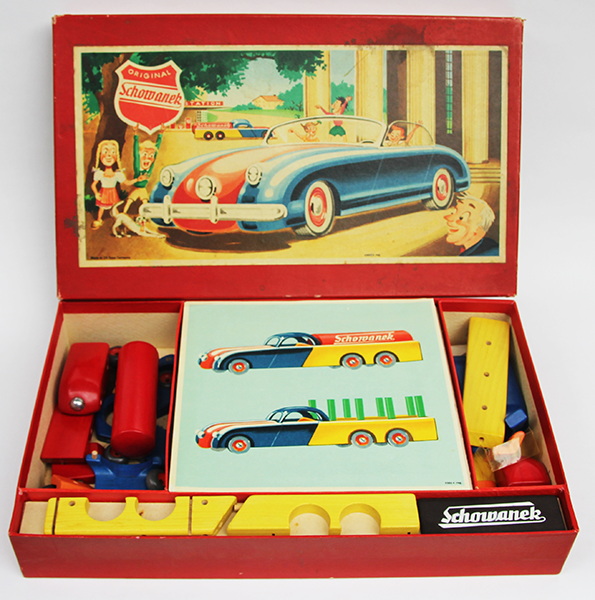
Cars can be assembled from various separate parts.
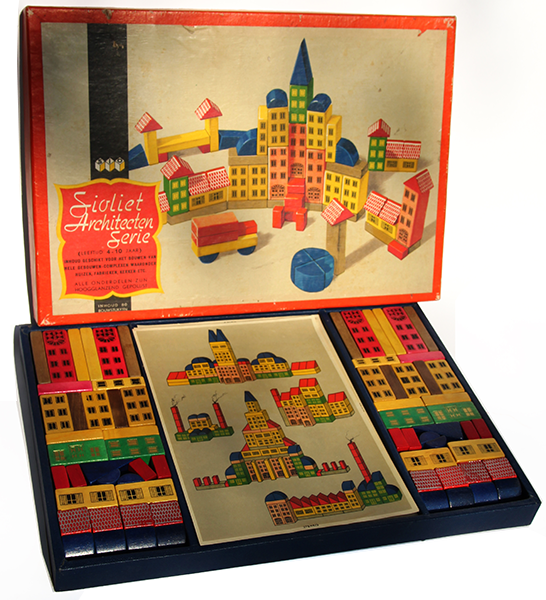
The Sioliet block set is a copy of the Schowanek construction sets, which could no longer be imported later.

According to this police report, Sigmund had a warehouse at Herengracht 45. On the night of March 5 to 6, 1942, an addressing machine and costumes belonging to Sigmund were stolen, among other things.