
Worms, Germany
In Germany, Ernst and Käthe Sigmund first lived in various places. From 1927, they lived above the Landauer store at Neumarkt 6-10 in Worms, where Ernst became manager and later director. A photograph from the early 1930s shows people leaning out of the window on the upper floor above the store.
Landauer was expropriated in 1933 and subsequently became known as Schöninger. During the Second World War, the center was destroyed by bombing.
In 2013 Stolpersteiner were placed for the Sigmund family at the site where the store once stood, Neumarkt 6-10.
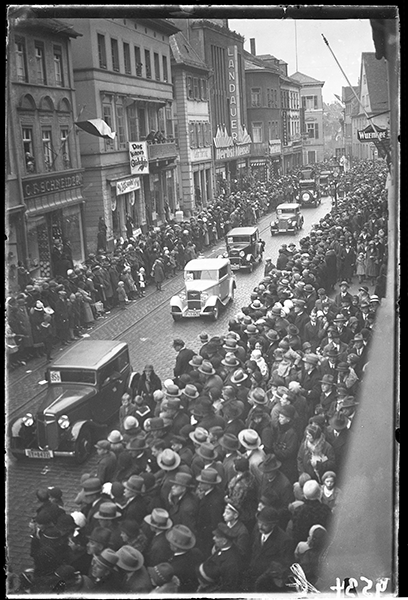
A festive parade of cars. The Landauer shop is at the back left.
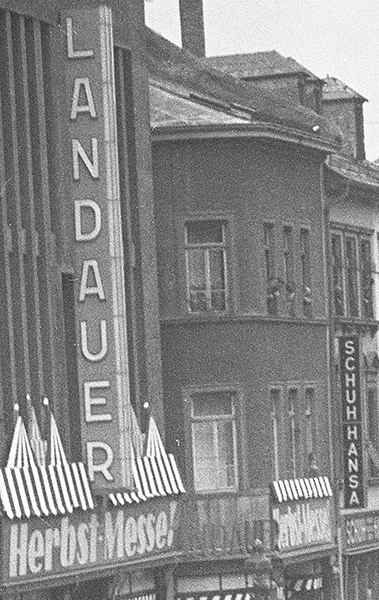
People are leaning out of the window to look at the cars.
The Sigmund family lived above the shop in these years, it could be that they are here in the photo.
Aerdenhout
After fleeing Nazi Germany to the Netherlands in 1933, the Sigmund family ended up in Aerdenhout. There was a severe housing shortage at that time. They were able to live with a family at Asterstraat 2 in Aerdenhout. The family lived there until they moved in October 1940.
Lotte and Kurt went to Montessori school at this time.
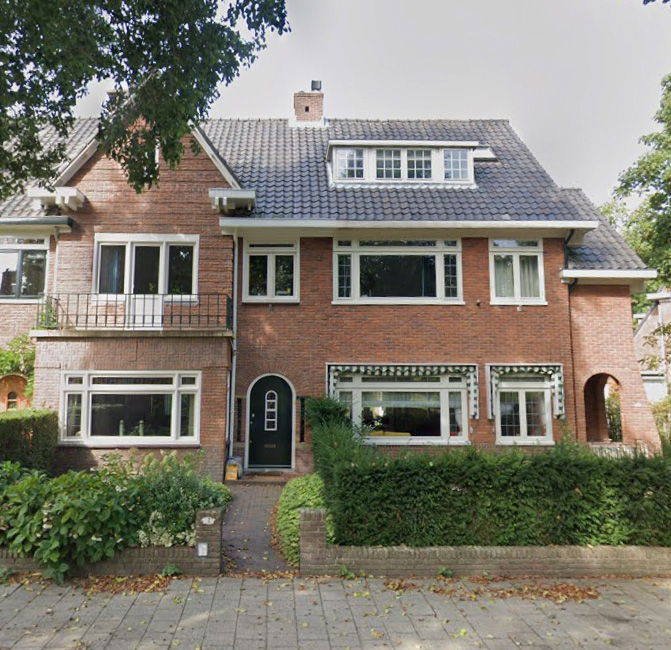
Photo: Google streetview
Bussum, Hooftlaan 13
In October 1940, Sigmund moved to Bussum, Hooftlaan 13. They moved in with the de Nooij family. Contact had been established with de Nooij because he worked as a fine painter for Sio. De Nooij painted, among other things, wooden Jantje-van-Alles for the horse-drawn wagons that Sio produced in Vroomshoop.
Behind the house, in the garden, was de Nooij's workshop. [see Kurt Notebook History II]
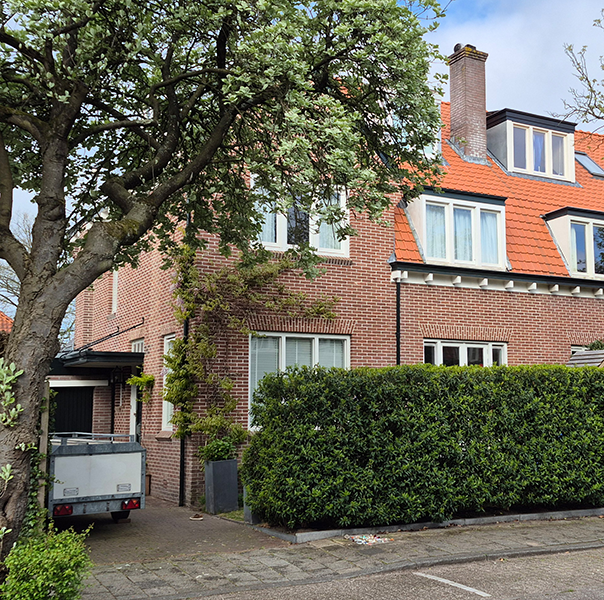
Asterdorp Amsterdam, Edelweisstraat 139
The forced move to A'dorp took place on June 23, 1942. Lotte writes about it:
We had to get off at Muiderpoort. From there, we were taken by bus to the quarantine. The quarantine wasn't bad at all, you know. After this little incident, we were taken back to the city. From there, we took the tram to the business. The business was Sigmund's office, Roomolenstraat 16-18.
In 1942, foreign Jews from the Gooi were forced to move to Asterdorp. The Sigmund family lived there until the first week of August 1942, when they were arrested.
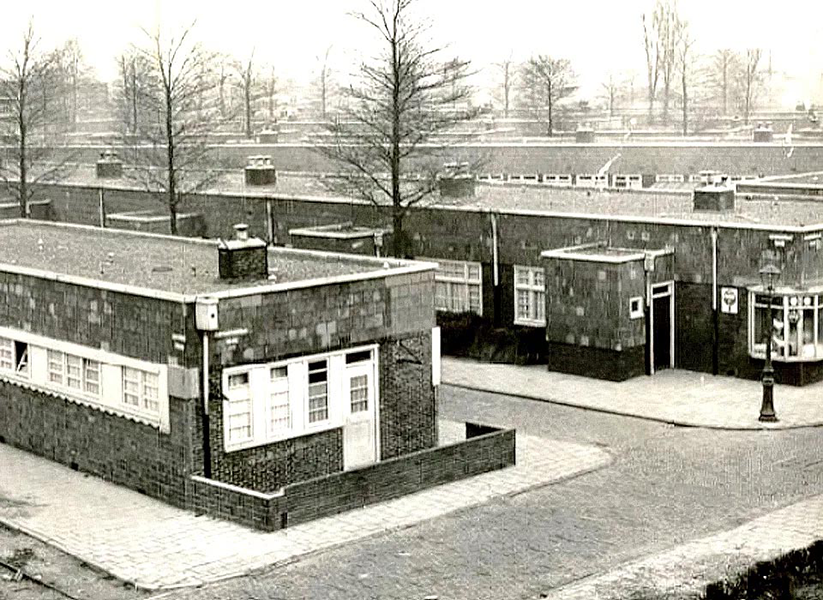
Asterdorp had been built before the war for antisocials.
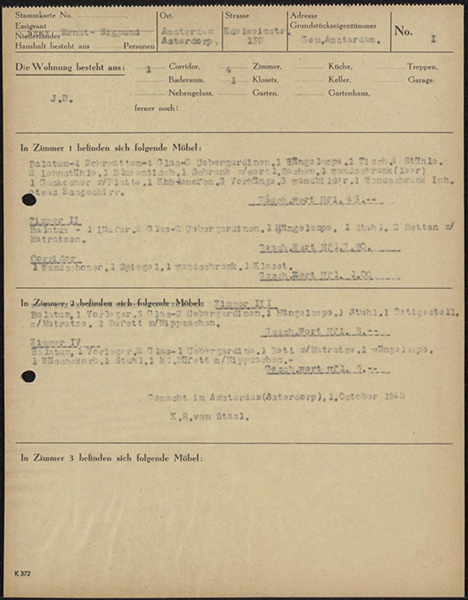
Inventory List October 1, 1942
This inventory list was drawn up by K.R. van Staal, 2 months after the deportation of the Sigmund family.
What remained after the transport to Auschwitz were the furniture and personal belongings. The value was noted, and the items were confiscated and removed.